Types of Coco Coir Explained: Coir Pith, Chips, Fibre and Every Block Format
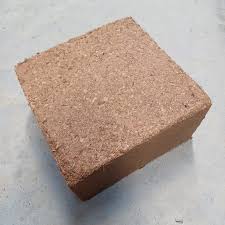
Coco peat, coco coir, coir pith, coco chips, coir fibre, 5kg blocks, 650g bricks, grow bags, slabs. Suppliers use these words as if every buyer already knows the difference, and quotes get compared that are not comparable at all. This guide sorts out the types of coco coir once and for all: the three raw materials the coconut husk yields, the blends professional growers actually buy, and every compressed and ready-to-use format that ships out of India. By the end you will be able to write a specification that a supplier cannot misread.
Coco Peat, Coco Coir, Coir Pith — Are They the Same Thing?
Mostly, yes — and that is the first source of confusion.
Coir is the fibrous material of the coconut husk, full stop. Coir pith (also called coco peat, coco pith or simply coir dust) is the fine, spongy, cork-like material that sits between the long fibres. Coco coir is used loosely in the trade to mean either the pith on its own or a pith-and-chip growing medium.
In practice, when a horticultural buyer says “coco coir” they almost always mean coir pith, sometimes blended with chips. When a mattress or rope manufacturer says “coir” they mean the long fibre. Because the words overlap, never place an order on a product name alone — order on a material + blend + format + specification, which is exactly what the rest of this guide sets up.
The Three Raw Materials from One Husk
A single coconut husk is decorticated into three usable streams. They behave completely differently in a root zone, and the whole grading system flows from that.
| Coir Pith (coco peat) | Coco Chips (husk chips) | Coir Fibre | |
|---|---|---|---|
| Particle size | 0 – 5 mm, fine and spongy | 8 – 16 mm or 15 – 25 mm chunks | 5 – 30 cm strands |
| Water holding | Very high — 8–9× its own weight | Moderate | Low |
| Air-filled porosity | ~10 – 20% | ~30 – 40% | Highest |
| Durability in the pot | Compacts slowly, 2–3 crop cycles | Very slow to break down | Slow |
| Typical use | Potting mixes, seedling media, soil conditioning, the base of every blend | Aeration component, orchids, anthurium, long-cycle crops | Grow bag reinforcement, erosion control, industrial (mattress, rope, geotextile) |
Coir pith (coco peat)
The workhorse. Pith is what gets compressed into blocks and bricks, and it is what almost every horticultural order is really about. Its strength — enormous water retention — is also its weakness: pure fine pith in a deep container can hold too much water and starve roots of oxygen. That is why almost nobody grows a long-cycle greenhouse crop in 100% fine pith.
Coco chips (husk chips)
Chunks of husk cut to a graded size. They create large air pockets that survive repeated irrigation, so they are the standard fix for the drainage problem above. Chips are also far slower to decompose, which matters for a crop sitting in the same substrate for ten months. Buyers should specify the size grade — 8–16 mm and 15–25 mm drain very differently.
Coir fibre
The long strands. In horticulture, fibre appears mostly as a minor component that adds structure and stops a slab from slumping. Its major markets are industrial rather than growing, so unless you are making grow bags or erosion blankets you rarely order it on its own.
The one thing all three share: they start out salty. Grade — unwashed, washed low EC or fully buffered — is a separate axis from material and format, and it is the axis that most often ruins a crop. We cover it in depth in the low EC vs. high EC procurement guide.
Blends: What Professional Substrates Are Actually Made Of
Very few commercial growers buy a single raw material. They buy a ratio, chosen to hit a target air-to-water balance for a specific crop and container depth.
| Blend | Character | Typically used for |
|---|---|---|
| 100% fine pith | Maximum water retention, lowest air | Seed germination, plug trays, potting-soil manufacture, soil conditioning |
| 70:30 pith:chips | Balanced, forgiving | General greenhouse pots, nursery containers |
| 60:40 pith:chips | Free-draining, high oxygen | Tomato, cucumber and pepper slabs; high-frequency fertigation |
| 50:50 pith:chips | Very open, dries fast | Orchids, anthurium, long-cycle tropicals, very warm climates |
| 100% chips | Almost pure aeration | Orchid bark substitute, mulch, top-dressing |
Two rules of thumb: the deeper the container, the more chips you need (a tall pot drains poorly at the bottom), and the more frequently you irrigate, the more chips you can afford — high-frequency fertigation systems suit an open substrate that never waterlogs.
Compressed Formats: How Coir Actually Ships
Coir is compressed roughly 15:1 for freight, which is the entire economic reason it can be shipped halfway around the world and still compete with local peat on cost. The format you choose determines your handling, your labour and your cost per litre.
| Format | Typical size | Rehydrated volume | Water needed | Best for |
|---|---|---|---|---|
| 5 kg block | ~30 × 30 × 12–15 cm | 75 – 80 L | 20 – 25 L | Container-scale buyers, nurseries, soil blenders |
| 650 g brick | ~20 × 10 × 5 cm | 8 – 9 L | 2.5 – 3 L | Retail packs, garden centres, e-commerce, sampling |
| Coir disc / pellet | 35 – 50 mm | 0.2 – 0.6 L | Sachet-sized | Propagation, plug production, seed kits |
| Compressed bale | Palletised multi-block unit | Varies with block count | Per block | Bulk industrial and blending lines |
The 5 kg block is the export default for a reason: it is the best compromise between compression efficiency, manual handling weight and rehydration time. If you want the loading and weight math for a full container of them, that is worked out in the 40ft HC container loading guide, and the rehydration procedure is in how to use 5kg coco peat blocks.
Ready-to-Use Formats: Grow Bags, Slabs and Open-Top Bags
Compressed blocks save freight but cost you labour: someone has to hydrate, buffer and fill. Ready-to-use formats invert that trade — you pay to ship some water and a lot of air, and in return the substrate arrives plant-ready in a wrapper that doubles as the container.
- Grow bags — roughly 100 × 15 × 15 cm, around 10–15 L, wrapped in UV-stable white-on-black film. Cut three planting holes and drainage slits, drip in, plant. The standard for tomato, cucumber and pepper.
- Slabs — flatter and wider, around 100 × 20 × 10 cm and ~20 L. More root run and better lateral moisture distribution, favoured in high-wire greenhouse production.
- Open-top bags — 8–12 L upright bags, the norm for strawberries and other berries on raised gutters. Crop-specific detail lives in the strawberry and tomato substrate guide.
- Filled pots and plug trays — pre-filled containers for propagation nurseries that want zero substrate handling.
Every one of these should be fully buffered before it leaves the factory. A ready-to-use format that has not been calcium-buffered is a hidden liability: you cannot easily flush it once it is wrapped, and the sodium bound to the coir will release into your feed exactly when the crop starts drinking.
Which Format Ships Best?
Compression is money. Ranked by usable litres delivered per container, compressed blocks win outright, and the gap is not small — a 40ft HC of 5 kg blocks lands in the region of 360,000 litres of rehydrated substrate, while the same box of pre-hydrated grow bags carries a fraction of that, because you are paying ocean freight on water.
The honest way to decide is not freight cost alone but total cost per usable litre delivered into the growing position, which is freight plus the labour, water and buffering chemicals you spend at your end. Large greenhouses with no substrate-handling crew often find ready-to-use bags cheaper despite the freight. Soil blenders and nurseries with a hydration line almost always find blocks cheaper. Work out both before you commit a season.
Writing a Specification a Supplier Cannot Misread
Put all six axes in the purchase order. Leave one out and you have left the supplier a choice you did not intend to give them.
- Material and blend — e.g. 70:30 coir pith to 8–16 mm chips.
- Grade — unwashed / washed low EC / fully calcium-buffered, with the EC ceiling and the extraction method that ceiling refers to.
- pH band — typically 5.5 – 6.8.
- Format and dimensions — 5 kg block at 30 × 30 × 15 cm, 650 g brick, 100 × 20 × 10 cm slab, and so on.
- Moisture and impurity caps — moisture 10–15% max, sand and impurity under 3%.
- Packaging and loading — polybag or shrink wrap, palletised or floor-loaded, marks and labels, container type.
Add a batch-specific lab report and a paid sample to the same order and you have removed nearly every way a shipment can surprise you. The documentation side — phytosanitary certificate, fumigation and HS code 53050040 — is covered in the India import compliance guide.
Matching Grade and Format to Your Operation
| If you are a… | Buy this material | In this format |
|---|---|---|
| Potting-soil manufacturer or blender | Washed low EC fine pith | 5 kg blocks, floor-loaded |
| Greenhouse hydroponic grower | Buffered 60:40 pith:chips | Grow bags or slabs |
| Berry grower on gutters | Buffered pith or 70:30 blend | Open-top bags |
| Propagation nursery | Washed low EC fine pith | Blocks or plug-filled trays |
| Garden centre or retail brand | Washed low EC pith | 650 g bricks and discs |
| Mushroom farm or livestock operation | Unwashed high EC pith | 5 kg blocks, lowest cost per tonne |
If your operation spans two rows of that table, split the order rather than compromising on one grade — the price difference between grades is far smaller than the cost of using the wrong one. See how the grades map across our product range, or compare coir against your current medium in the coco peat vs. peat moss comparison.
Tell us the crop, the container depth and the irrigation frequency, and we will specify the blend and format for you — then request a quote with a free sample block shipped to your facility.
Ready to source export-grade coco peat?
Get lab-tested specifications, container pricing (FOB/CIF) and a free sample block shipped to your facility.
Frequently Asked Questions
What is the difference between coco peat and coco coir?+
Coir is the fibrous material of the coconut husk in general. Coco peat (coir pith) is specifically the fine, spongy material found between the long fibres. In horticulture the terms are used almost interchangeably, so always order on material, blend, format and specification rather than on a product name alone.
What is the difference between coco peat and coco chips?+
Coco peat is fine pith of 0–5 mm that holds 8–9 times its weight in water with roughly 10–20% air-filled porosity. Coco chips are 8–16 mm or 15–25 mm husk chunks with 30–40% air-filled porosity that drain fast and break down very slowly. Most professional substrates blend the two — commonly 70:30 or 60:40 pith to chips.
What size is a 5kg coco peat block and how much substrate does it make?+
A standard 5kg coco peat block measures roughly 30 × 30 × 12–15 cm. Hydrated with about 20–25 litres of water it expands to 75–80 litres of usable substrate, a compression ratio of roughly 15:1 that is what makes coir economical to ship worldwide.
Which coco coir blend is best for hydroponic tomatoes?+
A 60:40 blend of coir pith to 8–16 mm chips, fully calcium-buffered, is the usual choice for tomato, cucumber and pepper on high-frequency fertigation. The chips keep air-filled porosity high through a long crop cycle, and buffering prevents calcium and magnesium lock-out.
Are coco coir grow bags better than compressed blocks?+
Neither is universally better — they trade freight against labour. Blocks ship roughly 15:1 compressed so far more usable litres fit in a container, but you must hydrate, buffer and fill at your end. Grow bags and slabs arrive plant-ready but you pay ocean freight on water and air. Compare them on total cost per usable litre delivered into the growing position.
What is a 650g coco coir brick used for?+
A 650g brick is about 20 × 10 × 5 cm and expands to 8–9 litres with roughly 2.5–3 litres of water. It is the retail and e-commerce format — garden centres, consumer packs and sample shipments — because it is light enough to post and small enough to hydrate in a bucket.