Coco Peat vs. Peat Moss: Which Is Better for Commercial Growing?
For decades, peat moss was the default growing medium in professional horticulture. Today, more and more growers and soil blenders are switching to coco peat (coir). The reasons are partly environmental and partly practical — and if you buy substrate at volume, the differences directly affect your cost, your crop and your brand’s sustainability story. Here is an honest, side-by-side look at coco peat vs. peat moss.
What They Are
Peat moss is decomposed sphagnum moss harvested from peat bogs that take thousands of years to form. Coco peat (also called coir pith or coco coir) is made from the fibrous husk of coconuts — a renewable by-product of the coconut industry that would otherwise be waste. That origin story is the root of most of the practical differences below.
Coco Peat vs. Peat Moss: Side by Side
| Property | Coco Peat (Coir) | Peat Moss |
|---|---|---|
| Renewability | Renewable (annual coconut crop) | Non-renewable (millennia to form) |
| pH | 5.5 – 6.8 (near neutral) | 3.5 – 4.5 (acidic, needs liming) |
| Rewetting | Rehydrates easily | Hard to rewet once dry |
| Water retention | Excellent | Excellent |
| Aeration / drainage | Superior, more air porosity | Good but compacts over time |
| Lifespan in mix | Longer, resists breakdown | Breaks down faster |
| Shipping | Compressed blocks (~15:1) | Bulky bales |
| Environmental impact | Low; uses a waste stream | High; bog destruction, carbon release |
The pH Difference Matters for Your Feed Program
Peat moss is strongly acidic (pH 3.5–4.5), so growers must add lime to bring it into a usable range — an extra input and an extra variable. Coco peat sits naturally around pH 5.5–6.8, close to ideal for most crops, which makes nutrient management simpler and more predictable. For a blender, fewer amendments means a more consistent finished product.
Rewetting and Water Behaviour
One of peat moss’s biggest practical frustrations is that once it dries out, it becomes hydrophobic and resists taking up water again. Coco peat rehydrates readily even after drying, which reduces crop stress and makes it far more forgiving in irrigation. Both hold water well, but coir generally offers better air porosity, protecting roots from waterlogging.
The one thing to manage with coir: because coconuts grow near the coast, raw coir carries salts. That’s exactly why you buy washed low-EC or buffered coir — the salt is already removed and, in buffered product, the cation sites are pre-loaded with calcium and magnesium. See our full breakdown of EC grades if you’re specifying substrate.
Sustainability: A Real Commercial Advantage
Peat bogs are major carbon sinks, and harvesting them releases stored carbon while destroying habitat — which is why several countries are moving to restrict or ban peat use in horticulture. Coco peat repurposes a by-product of an existing food crop. For growers and retailers, “peat-free” is increasingly a selling point with customers and a hedge against future regulation.
Cost and Logistics
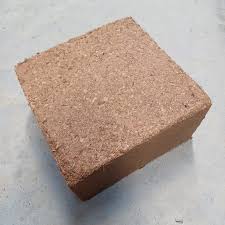
Coco peat’s compression is a logistics win: a 5kg block ships dense and dry, then expands to 75–80 litres on-site — roughly 15 times its shipped volume. That means dramatically lower freight cost per usable litre compared with shipping bulky peat bales. For importers and blenders, this is often the deciding factor once quality is equal.
The Verdict
Peat moss still performs well and remains familiar, but coco peat matches or beats it on pH convenience, rewetting, aeration, shipping economics and sustainability — provided you buy a properly washed or buffered grade. For most commercial operations making the switch, coir is the future-proof choice.
Ready to trial coir? Request a quote and free sample and we’ll get you set up.
Ready to source export-grade coco peat?
Get lab-tested specifications, container pricing (FOB/CIF) and a free sample block shipped to your facility.
Frequently Asked Questions
Is coco peat better than peat moss?+
For most commercial growers, yes — coco peat has a near-neutral pH (5.5–6.8 vs peat's acidic 3.5–4.5), rewets easily, offers better aeration, ships compressed at ~15:1, and is renewable. The one thing to manage is salt content, solved by buying washed low-EC or buffered coir.
Is coco peat more sustainable than peat moss?+
Yes. Coco peat is made from coconut husk, a renewable by-product, while peat moss is harvested from bogs that take millennia to form and store large amounts of carbon. Several countries are restricting peat use, making coir a future-proof choice.
Can I replace peat moss with coco peat directly?+
Largely yes, but adjust for pH (coir needs no liming) and feed calcium and magnesium, especially with buffered coir. Many blenders substitute coir for peat at similar or higher ratios in their mixes.