Coco Peat for Strawberries & Tomatoes: The Grower's Substrate Guide
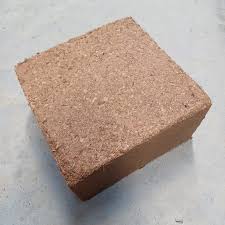
Strawberries and tomatoes are two of the most valuable crops grown in coir worldwide — and both are unforgiving about substrate quality. Get the coco peat right and you get uniform, high-yield plants on a predictable feed program. Get it wrong and you fight salt stress and calcium deficiency all season. This guide explains how to choose and use coco peat for strawberries and tomatoes in commercial production.
Why Growers Choose Coir for Berries and Tomatoes
- Air and water balance: coir holds ample water while keeping air around the roots, which berries especially need.
- Clean and disease-free: a fresh, sterile root zone reduces soil-borne disease pressure.
- Precision control: in an inert medium you control exactly what the plant is fed — essential for high-wire tomato and tabletop strawberry systems.
- Consistency: uniform substrate means uniform plants, which matters for labour and harvest scheduling.
Which Coco Peat Grade to Use
For both crops, fully buffered coir is the professional standard. Buffering pre-loads the coir with calcium and magnesium so it won’t strip those nutrients from your feed during the critical early weeks — the classic cause of blossom-end rot in tomatoes and weak, pale strawberry plants.
| Crop | Recommended grade | Target EC | Target pH |
|---|---|---|---|
| Strawberries | Buffered coir (blocks/bags) | < 0.8 mS/cm | 5.8 – 6.2 |
| Tomatoes | Buffered coir slabs | < 0.8 mS/cm | 5.8 – 6.5 |
Always start with a batch lab report confirming EC and pH before planting.
Why not unwashed coir? High-EC coir carries background salt that competes with nutrient uptake and stresses berries in particular. If salt-sensitivity matters — and for strawberries it very much does — specify washed low-EC or buffered product. See our grade comparison for the full picture.
Growing Strawberries in Coco Peat
Strawberries are typically grown in coir on raised tabletop systems in grow bags or blocks. Keys to success:
- Use buffered coir with a stable, low EC to protect young runners.
- Maintain pH around 5.8–6.2 for strong iron and micronutrient availability.
- Ensure good drainage — berries hate wet feet; coir’s air porosity helps here.
- Feed a complete solution with adequate calcium for firm, shelf-stable fruit.
Growing Tomatoes in Coco Peat
High-wire tomatoes are commonly grown on coir slabs. Priorities:
- Use buffered slabs sized to your system for consistent root volume per plant.
- Keep EC controlled and steady; spikes drive blossom-end rot and cracking.
- Supply consistent calcium and magnesium — non-negotiable for tomato fruit quality.
- Manage irrigation frequency to hold the slab in the ideal moisture band without saturation.
Avoiding the Two Classic Problems
Calcium deficiency / blossom-end rot
Usually traced to unbuffered coir stripping calcium, unstable EC, or irrigation swings. Buffered coir plus steady feeding and moisture largely prevents it.
Salt stress
Shows as stunted growth and leaf-edge burn. The fix is upstream: buy low-EC or buffered coir and verify it with a lab report before the crop goes in.
Tell us your crop, system and volume and request a quote — we’ll recommend the exact grade and ship a sample to trial.
Ready to source export-grade coco peat?
Get lab-tested specifications, container pricing (FOB/CIF) and a free sample block shipped to your facility.
Frequently Asked Questions
What EC should coco peat be for strawberries?+
Use fully buffered coir below 0.8 mS/cm with pH around 5.8–6.2. Strawberries are salt-sensitive, so a stable low EC verified by a lab report is important.
Is coco peat good for growing tomatoes?+
Yes — buffered coir slabs are a professional standard for high-wire tomatoes. Keep EC steady and supply consistent calcium and magnesium to prevent blossom-end rot.
Why do my tomatoes get blossom-end rot in coir?+
Usually from unbuffered coir stripping calcium, unstable EC, or irrigation swings. Use buffered coir, steady feeding and consistent moisture to prevent it.