Coco Husk Chips Explained: Size Grades, Air Porosity and the Crops That Need Them
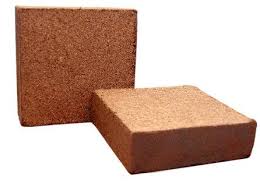
Every serious coir specification has two halves. The first is coir pith — the fine, spongy material that holds the water. The second is coco husk chips, the graded chunks of husk that hold the air. Buyers spend most of their negotiating energy on the first half and almost none on the second, which is why so many substrates arrive technically compliant and still suffocate a root system by month four.
This guide is about that second half: what husk chips actually are, what each size grade does inside a root zone, which blend ratio suits which crop, and how to write a chip line on a purchase order that a supplier cannot read two different ways.
What Coco Husk Chips Actually Are
A coconut husk is decorticated into three streams — long fibre, fine pith, and the woody husk material in between. Cut that woody material into graded chunks and you have coco husk chips, also sold as coco chips, coir chips or coir husk chunks.
Physically they are closer to orchid bark than to peat. A chip is mostly lignin and cellulose, it is rigid, and it does not collapse when it gets wet. That single property — structural rigidity under repeated irrigation — is the entire reason chips exist in a professional substrate.
The Problem Chips Are There to Solve
Fine coir pith is superb at holding water, which is also its failure mode. A deep container filled with 100% fine pith develops a saturated layer at the bottom, air-filled porosity falls, and roots in that layer stop working. Add fertigation four or five times a day and the medium never gets a chance to breathe.
Chips fix this by occupying volume with rigid particles that cannot pack together. The voids between them stay open, drain freely after every irrigation and refill with air.
| Coir pith (coco peat) | Coco husk chips | |
|---|---|---|
| Particle size | 0 – 5 mm | 8 – 16 mm or 15 – 25 mm |
| Water holding | Very high, 8–9× own weight | Moderate to low |
| Air-filled porosity | ~10 – 20% | ~30 – 40% |
| Behaviour over a crop | Slowly compacts | Holds structure |
| Rewetting after dry-down | Difficult once fully dry | Easy, but slow to absorb initially |
| Role in the blend | The water buffer | The oxygen supply |
Neither material is better than the other. A substrate made only of pith drowns roots; a substrate made only of chips dries out between irrigations and wastes feed. The craft is in the ratio.
Size Grades and What They Do
Size is the specification that buyers most often leave out, and it changes the behaviour of the medium more than almost anything else.
| Grade | Typical size | Air-filled porosity | Where it belongs |
|---|---|---|---|
| Fine chips | 5 – 8 mm | Moderate | Propagation mixes, shallow trays, seedling blends |
| Standard chips | 8 – 16 mm | High | The workhorse blend component for greenhouse vegetables and berries |
| Coarse chips | 15 – 25 mm | Very high | Orchids, anthurium, epiphytes, standalone media, mulch |
| Mixed / ungraded | 5 – 25 mm | Unpredictable | Avoid in any crop where consistency matters |
Two practical rules follow from that table.
Bigger chips do not simply mean better drainage. Once chips get large relative to the pot they break the capillary connection through the medium, so water runs through the gaps instead of moving laterally into the pith. In a 10–15 litre grow bag on drip, 15–25 mm chips can leave dry pockets a few centimetres from an emitter. That is why 8–16 mm, not 15–25 mm, is the standard blending grade for vegetables.
Ungraded chips are the most common quality failure. A sack that contains everything from dust to 30 mm chunks behaves like neither grade. The fines migrate downward, seal the base of the pot, and you end up with worse drainage than you started with — while the invoice still says “coco chips”.
Choosing a Blend Ratio
The ratio is set by three things: how deep the container is, how often you irrigate, and how warm your climate is. Deeper, wetter and hotter all push you toward more chips.
| Blend (pith : chips) | Character | Typical crops |
|---|---|---|
| 100 : 0 | Maximum water retention | Seed germination, plug trays, soil conditioning, potting-soil manufacture |
| 70 : 30 | Balanced and forgiving | General nursery containers, ornamentals, mixed greenhouse pots |
| 60 : 40 | Free-draining, high oxygen | Tomato, cucumber, pepper on high-frequency fertigation |
| 50 : 50 | Very open, dries quickly | Long-cycle tropicals, very hot climates, deep containers |
| 0 : 100 | Pure aeration | Orchids, anthurium, bark substitute, mulch and top-dressing |
If you are unsure, 70:30 is the safe default: it adds meaningful air without demanding a change to your irrigation schedule. Moving to 60:40 usually requires shorter, more frequent irrigation cycles — the substrate holds less water, so the buffer between events is smaller. Changing the blend without changing the schedule is the single most common reason a grower concludes that “chips did not work”.
For crop-specific detail on berries and vine crops, see the strawberry and tomato substrate guide.
Chips as a Standalone Medium
Some crops want chips and nothing else.
- Orchids and anthurium. Epiphytic roots evolved on tree bark in moving air. Coarse 15–25 mm chips mimic that, and unlike fir bark they rewet easily and last several years.
- Mulch and top-dressing. A chip layer on the surface suppresses weeds, slows evaporation and does not blow away as readily as fine bark.
- Nurseries with long holding periods. Where a plant may sit in the same container for two or three years, chips resist the slow compaction that eventually strangles a pith-heavy mix.
For pure chip media, buffering matters even more than usual, because there is no pith to dilute whatever the chips release. See the section below.
Washing, Buffering and EC
Chips come out of the husk salty, exactly like pith. Sodium, potassium and chloride are present from the coconut itself and from any seawater or brackish-water retting. There is a second complication specific to chips: their high lignin content gives them a large cation exchange capacity, and until those exchange sites are saturated with calcium they will strip calcium and magnesium out of your feed and release sodium in exchange.
That is what buffering does — it saturates the exchange sites with calcium in the factory, with calcium nitrate, before the material ever meets your crop.
| Grade | What it means | Suitable for |
|---|---|---|
| Unwashed / high EC | Raw, salts intact | Mushroom substrate, animal bedding, erosion control |
| Washed low EC | Fresh-water washed to a stated EC ceiling | Ornamentals, nursery stock, tolerant field crops |
| Fully buffered | Washed, then calcium-buffered | Hydroponics, all high-value greenhouse crops, any pure-chip medium |
Chips take longer to wash through than pith because water has to penetrate a solid chunk rather than a dust, so a supplier who washes chips on the same cycle time as pith is not really washing them. Ask how long the chip wash cycle runs and how EC was measured — a number without a method attached means nothing. The full treatment is in the low EC vs. high EC procurement guide.
Hydration and Handling
Chips behave differently from pith on the hydration bench and it catches people out.
- They are slow to take up water at first. A dry chip is mildly hydrophobic. Allow a long soak — several hours rather than the 20–30 minutes a pith block needs — and expect the first soak to look unsuccessful for the first hour.
- They expand far less. Chips are already low-density, so the compression ratio on a chip block is modest compared with pith. Plan your volumes on the supplier’s stated expanded litres, not on a pith rule of thumb.
- They drain immediately. Once wet, a chip blend sheds excess water in minutes. Do not judge the mix by how heavy it feels.
- Mix wet, not dry. Blending dry chips into dry pith gives you a mix that separates as soon as it is handled. Hydrate both, then blend.
The general block procedure is in how to use 5kg coco peat blocks; the extra soak time is the only real difference for chips.
Five Mistakes Worth Avoiding
- Ordering “coco chips” with no size grade. You will get whatever is cheapest to screen that week.
- Using 15–25 mm chips in a drip-irrigated grow bag. Water channels straight through and leaves dry pockets.
- Increasing the chip fraction without shortening irrigation intervals. The medium holds less water; the schedule has to follow.
- Buying unbuffered chips for a hydroponic crop. Calcium and magnesium lock-out shows up two to three weeks in, by which time it is expensive to correct.
- Accepting an EC figure with no extraction method. A 1:5 dilution result and a 1:1.5 result are not the same number and cannot be compared.
Specifying Chips So a Quote Means Something
A chip line on a purchase order needs six things. Leave any one out and you have handed the supplier a decision you did not intend to give away.
- Material — coco husk chips, and whether blended with pith or supplied pure.
- Size grade — 8–16 mm or 15–25 mm, with a tolerance and a maximum fines percentage.
- Treatment grade — unwashed, washed low EC, or fully calcium-buffered, with the EC ceiling and the extraction method it refers to.
- pH band — normally 5.5 – 6.8.
- Moisture and impurity caps — moisture 10–15% maximum, sand and impurities under 3%.
- Format and packaging — block or bale size, compressed or loose, palletised or floor-loaded.
The procurement side of this — grading tolerances, lab tests worth paying for, container loading and what actually drives the price — is covered in the companion piece, buying coco husk chips wholesale. For how chips sit alongside every other coir grade and format, see types of coco coir explained.
Tell us your crop, your container depth and your irrigation frequency and we will specify the chip grade and blend ratio for you — then request a quote with a free sample shipped to your facility.
Ready to source export-grade coco peat?
Get lab-tested specifications, container pricing (FOB/CIF) and a free sample block shipped to your facility.
Frequently Asked Questions
What are coco husk chips?+
Coco husk chips are graded chunks of coconut husk, typically 8–16 mm or 15–25 mm, cut from the same husk that yields coir pith and coir fibre. They are the aeration component of a growing medium: they hold far less water than pith, create large air pockets that survive repeated irrigation, and break down very slowly because of their high lignin content.
What is the difference between coco husk chips and coco peat?+
Coco peat is fine pith of 0–5 mm that holds 8–9 times its weight in water at roughly 10–20% air-filled porosity. Coco husk chips are 8–25 mm chunks at roughly 30–40% air-filled porosity that drain fast. Pith supplies the water buffer, chips supply the oxygen, and most professional substrates blend the two at 70:30 or 60:40.
Which size of coco husk chips should I use?+
Use 8–16 mm chips for blending into greenhouse substrates for tomato, cucumber, pepper and berries, where you want more air without breaking the capillary connection through the pot. Use 15–25 mm chips for orchids, anthurium and other epiphytes, and as a standalone medium or a top-dressing where very fast drainage is the whole point.
Do coco husk chips need to be washed and buffered?+
Yes for any commercial crop. Raw husk chips carry sodium, potassium and chloride from the coconut and from any seawater retting, and the lignin holds onto calcium and magnesium until it is saturated. Specify washed low EC chips for tolerant crops and fully calcium-buffered chips for hydroponics, and ask for the batch lab report.
How long do coco husk chips last before they break down?+
Chips keep their structure far longer than pith because there is much more lignin in a chunk of husk than in pith dust. In practice a well-graded chip holds its air-filled porosity through a full 10–12 month greenhouse crop and frequently through two or three cycles, while fine pith begins to compact within one.
What ratio of coco husk chips to coco peat should I order?+
70:30 pith to chips is the forgiving general-purpose blend, 60:40 is the standard for high-frequency fertigation on tomato, cucumber and pepper, and 50:50 or 100% chips suit orchids and very warm climates. Deeper containers and hotter, wetter climates both push the ratio toward more chips.